Explain the Different Weights of Motor Oil
Reasons An Oil Change Is Critical. The second number the number after the W represents oils viscosity at 212 degrees F.

A Beginner S Guide To Motor Oil What You Need To Know Amsoil Blog
The number following the W indicates the weight of the oil when hot.
. All vary in the chemical components and viscosity. Higher viscosity motor oils that are thicker and better suited for high-temperature operation may include multi-grade oils or single-weight oils such as SAE 30 40 or 50. I dont have to tell you why that is bad.
What is Oil. But let us talk first about API or the American petroleum institute. This means that if the owners manual calls for a 30 weight using a 40 weight is not going to create an advantage.
One weight will be a winter weight and the other will be the hot weight. The w stands for winter and indicates that the lubricant in question has a different viscosity or different flow characteristics based on temperature. In our previous blog Motor Oil The 3 Main Types Explained Part 1 we looked at the different motor oil types.
Manufacturers recommend the. In part 2 we will break down oil grades and explain oil viscosity weight. To account for changing temperatures oil is manufactured through the use of additives so that it can have multiple grades of viscosity or multiple weights.
5w30 motor oil the 20 indicates that the oil has a lower viscosity and is thinner at higher temperatures. According to the definition SAE J300 there are 11 single-grade oil types available. All the numerical values are correctly referred to as weight or straight-weight oils.
Understanding what oil viscosity is and knowing how to determine the right oil viscosity for your vehicle is vital to ensuring that your engine is protected. Explain Motor Oil Weights First Number. Its More Than Just Oil.
So due to viscosity 5w20 is a thinner oil during operating temperatures whereas 5w30 is thicker during. Viscosity is a measure of how easily oil pours at room temperature. We will also uncover the motor oil organizations working behind the scenes.
SAEs J300 standard first published in 1911 and revised numerous times since classifies oil into 11 viscosity grades0W 5W 10W 15W 20W 25W 20 30 40 50 and 60. Car Engine Oils At A Glimpse. The first number indicates the viscosity of the oil at a cold temperature while the second number indicates the viscosity at operating temperature.
Low viscosity motor oils that pour easily at low temperatures typically have a 0W 5W or 10W rating. When these two oils are mixed the resulting blend will simply have viscosity characteristics thicker than 5W30 but thinner than 10W40 and this poses. The lower the number the lighter the weight and therefore the thinner the oil.
The majority of engines designed before Ford had 5W-20 oil. Motor oil viscosity grades are based on a scale developed by the API American Petroleum Institute lubricant organization. What is interesting is that there is a move towards thinner oil being used in the engines that manufacturers are recommending an SAE 5W-20 be used when in the past the type of oil recommended was SAE 5W-30.
Every API motor oil is mandated to be compatible. Lower viscosity oils pour with ease at a given temperature while higher viscosity oils are more. Ad Castrol Provides The Fluids The World Needs For Every Application.
Motor Oil Basics of Viscosity Weights Explained By bimmertips January 29 2018 Fun Facts oil viscosity weight The topic of oil is very complex and can go into many different topics such as viscosity conventional synthetic blends additivesthe list goes on. So you may see gear oil listed as 75W-90 which gives you both the winter and hot weights of the oil. For example 5W30 has low viscosity and 10W40 has higher viscosity.
The first number in the oil weight represents the oils viscosity at 0 degrees F. When we say compatible all the motor oils must have a base and additives. In this article I am going to explain the different types of oil viscosity and how you can find the right oil for your motor vehicle.
The lower the first. The act is discouraged. The polymers allow the oil to have different weights at different temperatures.
There are also 15W- and 20W-grade multi-weight motor oils. Oils first received this W designation from SAE in the 1950s. This enables the 5w20 motor oil to reach engine parts quicker and create less drag that reduces fuel economy.
Your 10W-30 motor oil can easily become a 10W-20 or even a SAE 10 10W-10 motor oil. The values are defined in a specification known as API 1509 and are based on the resistance the oil gives to flowing at two different temperatures cold and high. For example a 5w30 oil weight rating means that on cold start-up even at.
Make The Switch To Castrol. The Ins and Outs of Oil Viscosity. When comparing 5w20 vs.
Multi-weight oils such as 10W-30 are a new invention made possible by adding polymers to oil. Various car engine oil manufacturers have assured their customers that it is definitely safe to mix different weights of oil. 5W shall be called 5 weight winter-grade oil.
Oil weight refers to how thickthin the oil is which is the same as viscosity. Yes you can mix 5w30 oil with different brands but it is not recommended. Ad Buy synthetic oils for cars diesels bikes sleds boats and more.
0W 5W 10W 15W 20W 25W 20 30 40 50 and 60. What Do Oil Viscosity Numbers Mean. The more VI additives the worse the problem which is why auto manufacturers decided to steer car owners away from motor oils loaded with VI additives like the 10W-40 and 20W-50 viscosities.
Viscosity is the resistance to flow of a fluid. Brand new engine oils including the 0W-30 5W-30 and 10W-30 perform as single weight grade oil at fully warmed-up and operating temperature of your car. The other number refers to the oils resistance towards thinning at high-temperature conditions.
There are four major categories of motor oilconventional full synthetic synthetic blend and high mileage. It is correct to say 20 weight oil for 20. The W signifies winter not weight.
Engine Oil Codes Explained Sae Society Of Automotive Engineers Numbers Oil Viscosity Explained Youtube
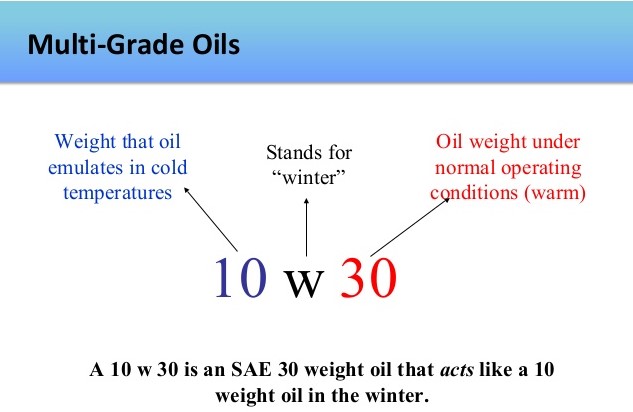
Engine Oil Grades Explained Know Your Car Engine Oil

Understanding Engine Oil Viscosity Youtube
No comments for "Explain the Different Weights of Motor Oil"
Post a Comment